Eyewear Manufacturing Insights
How Glasses Are Made: The Complete Glasses Manufacturing Process
TL;DR
- Premium acetate eyewear requires more than 14 manufacturing stages before becoming a finished frame.
- Luxury eyewear production combines CNC automation with handcrafted finishing techniques.
- Processes such as curing, tumbling, polishing, and hinge installation directly affect durability, comfort, and long-term performance.
- Acetate remains the preferred material for high-end eyewear because of its rich color depth, flexibility, and repairability.
- Modern eyewear factories are increasingly adopting sustainable materials such as bio-acetate and recycled acetate.
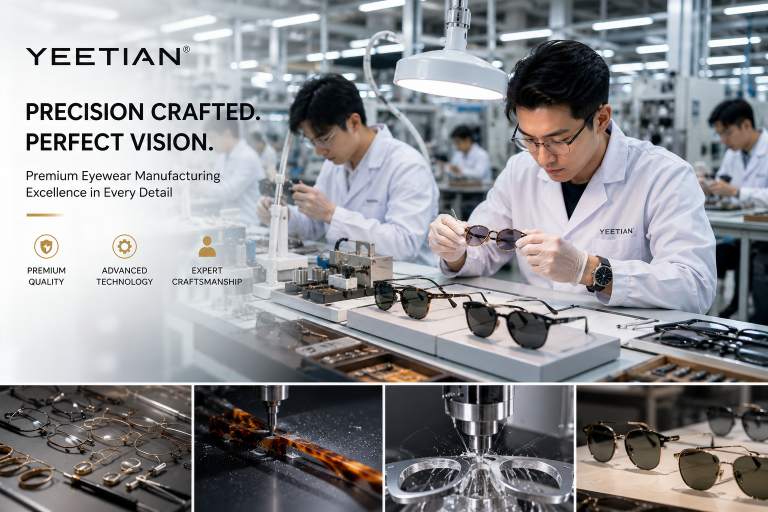
Eyewear is much more than a functional accessory—it is a combination of design, engineering, craftsmanship, and advanced manufacturing technology. From premium acetate frames to precision-fitted lenses, every pair of glasses goes through a detailed production journey before reaching consumers.
In this guide, we’ll explore the complete glasses manufacturing process, from raw materials to finished eyewear, and discover the techniques that make modern frames durable, comfortable, and stylish.
What Is the Glasses Manufacturing Process?
The glasses manufacturing process refers to the series of steps used to transform raw materials into finished eyewear frames and optical products. Manufacturers combine advanced machinery with skilled craftsmanship to ensure each frame meets strict quality and performance standards.
The process typically includes material selection, frame cutting, shaping, polishing, assembly, lens fitting, and quality inspection.
I. Introduction: The Industrial Craftsmanship Behind Premium Acetate Eyewear
Glasses manufacturing process begins when you pick up a finely crafted acetate eyewear frame, glide your fingertips along the smooth temples, and admire the layered tortoiseshell patterns or transparent gradient colors, it is difficult to imagine that this seemingly lightweight frame has undergone more than 14 precision manufacturing processes, hundreds of microscopic production steps, and a manufacturing cycle that can span from several days to even weeks.
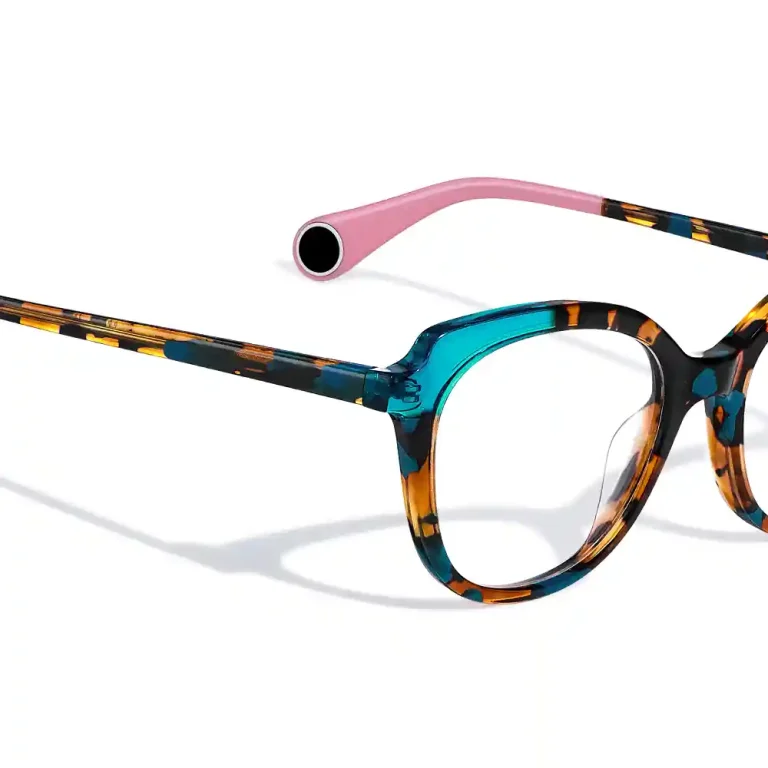
Unlike low-cost injection-molded plastic eyewear, acetate frames are produced using cellulose acetate derived from cotton fibers and wood pulp. The material offers superior polishability, excellent flexibility, thermal adjustability, and rich visual depth that cannot easily be replicated through injection molding.
For this reason, leading luxury eyewear brands continue to use acetate as one of their core materials. Behind every premium frame lies a complex production cycle involving precision machinery, manual craftsmanship, and extensive quality control procedures.
“Luxury acetate eyewear is one of the few modern products where industrial precision and handcrafted artistry still coexist.”
II. Material Preparation: Building the Foundation for Precision glasses manufacturing process
Step 1: Cutting the Acetate Sheets
Glasses manufacturing process: Production begins with large cellulose acetate sheets. These materials are cut into smaller frame blanks using 4-axis CNC carving machines or industrial punch presses.
Precision at this stage is critical because every later manufacturing step depends on the consistency of the original material dimensions.
Step 2: Material Curing
After cutting, the acetate blanks are baked in industrial ovens at 70°C for 7 days. This process removes internal moisture and stabilizes the material before machining.
If this step is skipped, acetate may shrink, warp, or crack during later processing stages or long-term wear.
Step 3: Lamination and Material Splicing
One of acetate’s most distinctive characteristics is its layered visual effect. Manufacturers laminate different acetate colors and transparencies together to create gradients, patterns, and customized artistic finishes.
III. CNC Machining and Handcrafted Frame Shaping
Step 4: 5-Axis CNC Machining
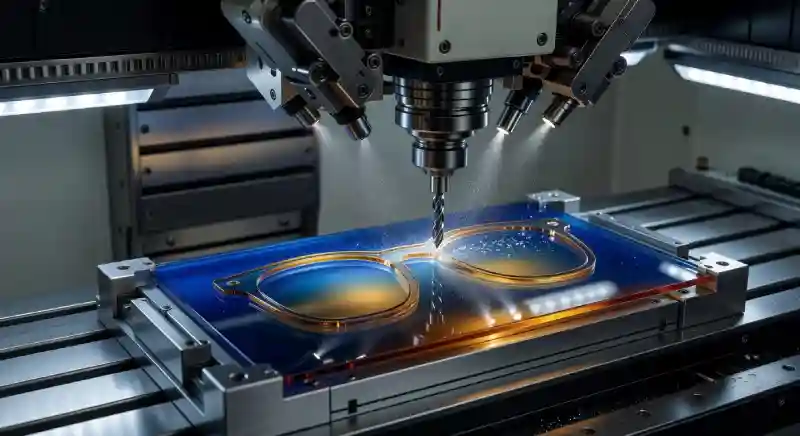
Prepared acetate blanks are transferred into 5-axis CNC carving centers for precision shaping. These machines carve the frame into its final geometry with tolerances typically controlled within ±0.1 mm.
During glasses manufacturing process, the factory machines lens grooves, hinge cavities, frame contours, and bridge structures.
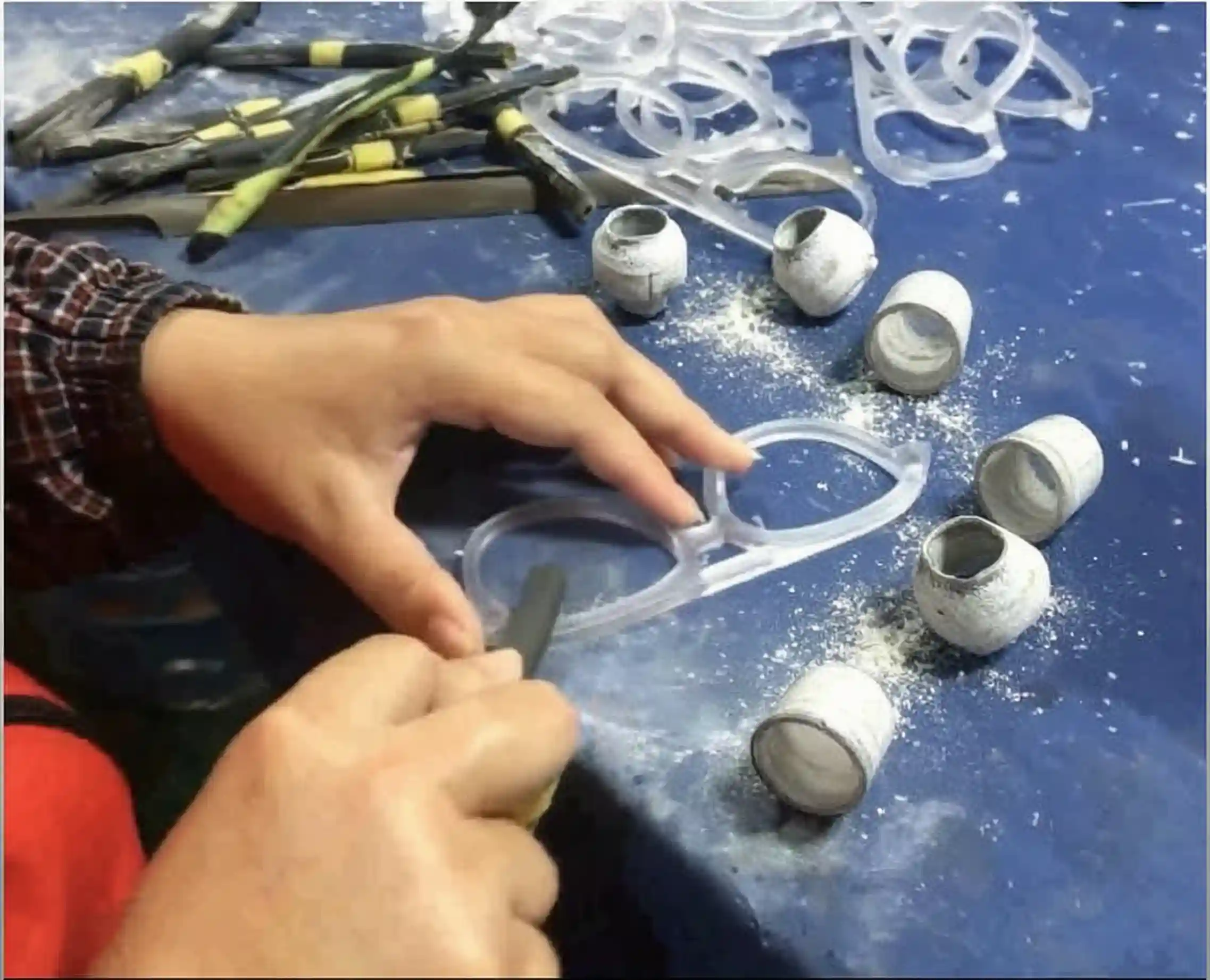
Step 5: Manual Finishing
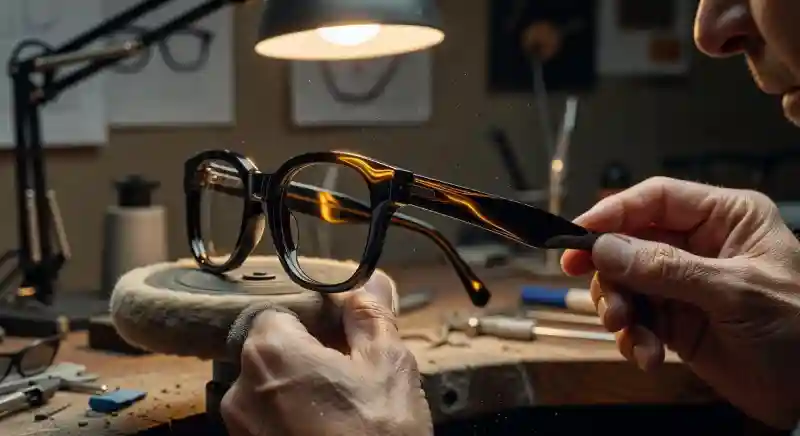
Even with advanced automation, handcrafted finishing remains essential. Skilled technicians manually remove burrs, smooth edges, and refine touch points using scrapers and sandpaper.
This stage directly affects wearer comfort and is one of the key differences between luxury eyewear and low-cost mass production.
Step 6: Tumbling
Frames are placed into tumbling barrels filled with wood chips, polishing compounds, and tumbling oil. Through continuous rolling friction, the acetate surface gradually becomes smoother and more refined.
The full tumbling process lasts approximately 78 hours, divided into rough, medium, and fine tumbling stages.
IV. Structural Reinforcement and Assembly
Step 7: Front Bending
The front frame is heated and bent using specialized molds to match the curvature of the human face.
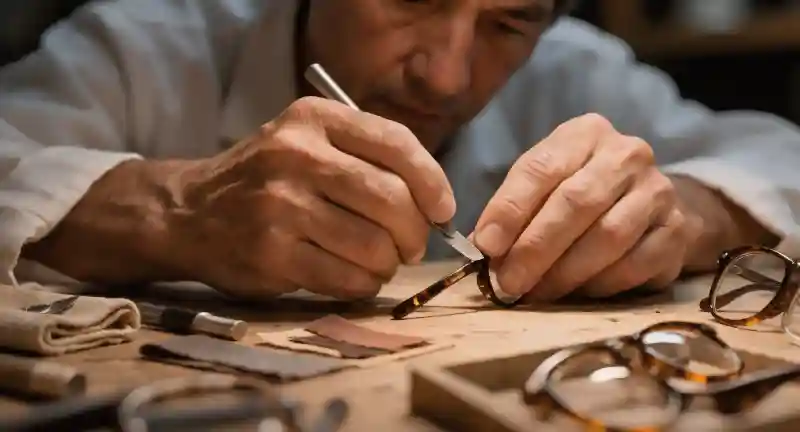
Step 8: Core Wire Insertion
Copper wire cores are inserted into the temples to improve structural strength, flexibility, and long-term shape retention.
Step 9: Hinge Installation
Metal hinges are heat-inserted into precisely milled cavities. This creates a strong molecular-level bond between the metal hinge and the acetate frame structure.
Step 10: Miter Cutting
The frame front and temple joints are precision-cut to achieve proper opening angles and stable structural alignment after assembly.
V. Surface Finishing and Branding in Glasses Manufacturing Process
Step 11: Final Polishing
Frames undergo multiple polishing stages using sanding compounds, yellow wax buffing, and fine polishing wax to achieve a glossy mirror-like finish.
Step 12: Pad Printing
Brand logos, model numbers, and decorative elements are applied using pad printing machines with specialized silicone pads and industrial ink systems.
Step 13: Lens Cutting
Demo lenses or prescription lenses are cut according to the frame geometry using precision lens edging equipment.
Step 14: Final Adjustment and Packaging
Technicians complete final frame alignment, hinge adjustment, cleaning, inspection, and packaging before shipment.
https://en.wikipedia.org/wiki/Cellulose_acetate
VI. Overview of the 14 Core Glasses Manufacturing Processes
| No. | Process | Main Purpose |
|---|---|---|
| 1 | Cutting | Prepare acetate blanks |
| 2 | Material Curing | Remove internal moisture |
| 3 | Lamination | Create layered color effects |
| 4 | 5-Axis CNC Machining | Shape frame geometry |
| 5 | Manual Finishing | Improve detailing and comfort |
| 6 | Tumbling | Smooth frame surfaces |
| 7 | Front Bending | Create ergonomic curvature |
| 8 | Core Wire Insertion | Reinforce temples |
| 9 | Hinge Installation | Connect temples to frame front |
| 10 | Miter Cutting | Improve assembly precision |
| 11 | Final Polishing | Create glossy finish |
| 12 | Pad Printing | Apply branding elements |
| 13 | Lens Cutting | Fit lenses accurately |
| 14 | Adjustment & Packaging | Final quality inspection |
Why Acetate Is Popular in Glasses Manufacturing Process
Acetate has become one of the most sought-after materials in premium eyewear production because it offers an exceptional combination of durability, flexibility, and aesthetics.
Benefits of acetate frames include:
- Lightweight comfort
- Rich color options
- Hypoallergenic properties
- Long-lasting durability
- Premium appearance
These characteristics make acetate an excellent choice for both fashion and optical eyewear.
The Role of Technology in Modern Eyewear Manufacturing
Today’s eyewear industry relies heavily on advanced manufacturing technologies to improve precision and efficiency.
Modern innovations include:
- CNC machining
- CAD design systems
- Laser engraving
- Automated polishing equipment
- Digital quality control systems
These technologies help manufacturers produce high-quality frames while maintaining consistency across large production volumes.
VII. Final Thoughts
Acetate eyewear manufacturing is a sophisticated engineering process that combines materials science, precision machining, and handcrafted finishing.
From 7-day moisture-removal curing to 78-hour tumbling cycles and molecular-level hinge installation, every stage directly contributes to the quality, comfort, and longevity of the finished eyewear.
As sustainability becomes increasingly important, bio-acetate and recycled acetate materials are becoming major trends in the global eyewear industry. However, the core principles remain unchanged: precision, craftsmanship, and attention to detail.
Behind every premium acetate frame is the precise coordination of materials, machinery, craftsmanship, and time.